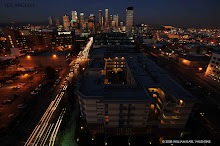
I was finally able to purchase Fujifilm's Finepix X100! After initial tests and reading half the manual so far I can definitely say this camera is amazing. The image quality and the camera's capabilities are stunning. The camera menu is a little complex and takes a few days to get used to but once you do it is easy. This is definitely a range finder and you need to be comfortable with that way of photographing. For years I have looked for a digital answer to replacing my Leica M4 P when it comes to my street photography and this is it. Handles very similar, has the same equivalent focal length lens I love, 35mm, and the lens is razor sharp. My Nikon D3 and D7000 bodies are still great, better suited for a lot of tasks, but the X100 will replace them for most of my street work for sure.
- Posted using BlogPress from my iPad
Friday, August 12, 2011
Wednesday, July 20, 2011
The Ten Golden Rules
Lomography.com is a web site dedicated to the use of inexpensive film cameras which produce inconsistant and sometimes unexpected results. The site has identified and documented their ten golden rules for Lomography (the act of photographing with these cameras) and it just happend to be something I have also followed for a number of years (obviously there are other people out there as smart and me, and a lot who are smarter). Here is Lomography's list which I couldn't agree more with.
The Ten Golden Rules:
#1. Take your camera everywhere you go. (I hate going out without atleast a G11 in the car)
#2. Use it anytime Day and Night. (Especially in the digital age when there is no film cost)
#3. Lomography is not an interference with your life but part of it. (Photographers photograph its what we do. The act of photographing is just as important as the final print. You go through life looking for what you can see.)
#4. Try the shot from the hip. (doing this more and more, maybe it will change when I get a Fujifilm X100 then I can go back to rangfinder photography, but right now I like what I am seeing shooting from the hip)
#5. Approach the objects of your lomographic desire as close as possible. (Bill Jenkings - of New Topographics fame - was one of my teachers at ASU, the best advice he ever gave me with my images was to suggest I put on a 35mm lens and get closer to my subjects. Easier said than done sometimes, especially early on)
#6. Don't Think. (I remember a certain graduate student at ASU who made this wonderful image of a dead wild pig by a construction site. He was so proud of that image, and it was a great image, that he wouldn't take any photos unless he knew they were equally as good as his best image. He would go out to photograph and never make an exposure because he was over thinking the process. Sometimes the best approach is to just go out and photograph anything and everything then see what you come up with).
#7. Be Fast. (If you hesitate you miss the "Decisive Moment")
#8. You don't have to know beforehand what you captured on film. (More about not overthinking things)
#9. Afterwords Either (always good to get surprises on proof sheets or downloads)
#10. Don't worry about any rules (Just let your vision guide you and go Photograph)
The Ten Golden Rules:
#1. Take your camera everywhere you go. (I hate going out without atleast a G11 in the car)
#2. Use it anytime Day and Night. (Especially in the digital age when there is no film cost)
#3. Lomography is not an interference with your life but part of it. (Photographers photograph its what we do. The act of photographing is just as important as the final print. You go through life looking for what you can see.)
#4. Try the shot from the hip. (doing this more and more, maybe it will change when I get a Fujifilm X100 then I can go back to rangfinder photography, but right now I like what I am seeing shooting from the hip)
#5. Approach the objects of your lomographic desire as close as possible. (Bill Jenkings - of New Topographics fame - was one of my teachers at ASU, the best advice he ever gave me with my images was to suggest I put on a 35mm lens and get closer to my subjects. Easier said than done sometimes, especially early on)
#6. Don't Think. (I remember a certain graduate student at ASU who made this wonderful image of a dead wild pig by a construction site. He was so proud of that image, and it was a great image, that he wouldn't take any photos unless he knew they were equally as good as his best image. He would go out to photograph and never make an exposure because he was over thinking the process. Sometimes the best approach is to just go out and photograph anything and everything then see what you come up with).
#7. Be Fast. (If you hesitate you miss the "Decisive Moment")
#8. You don't have to know beforehand what you captured on film. (More about not overthinking things)
#9. Afterwords Either (always good to get surprises on proof sheets or downloads)
#10. Don't worry about any rules (Just let your vision guide you and go Photograph)
Sunday, June 26, 2011
More on Modern Technology
In my attempt to stay current with modern technology I recently got the iPad2 for Fathers Day. I have taken my time researching and downloading apps, during which time I came across this Blog Application which I am testing here with this post.

- Posted using BlogPress from my iPad
Location:Newport Beach, California
Thursday, December 16, 2010
Print Special for the Holidays
$50 each print


Got this pulled together a little later than I had hoped to but I can still deliver prints before Christmas.
All prints are archivally printed with an Epson 3880 printer and matted in 2 ply white archival matting. The image size of each print is 5.25" x 8.25" and the exterior of the matt measures 9"x12".
Prints are $50 each or $200 for a boxed portfolio of all 5 images. The edition size will be less than 30 prints of each image.
Shipping or delivery costs are extra. For every order outside the local area I envision having to ship FedEx with a cost of approximately $20 per order.
Prices are good through the end of the year.
e-mail mail@valentine-photo.com to place orders and for all questions
Sunday, November 28, 2010

Christmas & Holiday Season Guide
When the holidays come around each year I am often asked about digital cameras and which models would I recommend. Being proactive I will speak to that now and in the coming days I am also going to post some special pricing for portrait sittings and print purchases as well for anyone looking for a unique holiday gift this year.
When it comes to cameras I primarily use Nikon DSLR's and Canon point and shoot cameras. I always try and have my Canon G11 in the car whenever I go somewhere. Canon and Nikon are both outstanding DSLR camera makers. I like the higer ISO capabilities of the Nikon and I began using Nikons almost 30 years ago when my grandmother gave me her Nikon F she had purchased on a trip to Japan in the 60's. Both camera companies are great, I would suggest comparing the two and deciding what fits best in your hands (basically the whole ergonomic experience). In my opinion the Nikon D7000 is the hot DSLR to go with now. Metal body, reasonable price, and a lot of camera. Put the 18-200mm Dx zoom lens on it and you're set.
I have had poor luck with Nikon point and shoot cameras. I have had outstanding performance from my Canon point and shoot cameras. I own a Canon G11 and would suggest a Canon G12 to anyone looking for a more capable point and shoot. It is a little bulky but Canon has a number of great cameras that are more compact. Nikon has the Coolpix P7000 which is designed to compete with the G12 and they look similar. The example photos I have seen from it seem to lose shadow detail in B&W mode. It may be how the images are being photographed or the camera, I don't know. Having owned a G9 & G10 I know what they bring to the table. The Olympus Pen also appears to be another good camera in this group. Identify what you want to be able to photograph then find the camera that has the features you will need to accomplish that. Tell the camera store people what you need, don't let them tell you what they want to sell you.
For complete comparisons I would look at the following sites:
For those who are going to self publish holiday calendars, books, cards now is the time to do it. I have used Shutterfly, Lulu.com, and My Publisher in the past plus there are others like Smug Mug and MPix out there as well. I think My Publisher has the best results of the three I have used so far and they are running sales right now. They just got extended through Tuesday. I would expect they will run more after that but as the holidays get closer the prices will go up. Self publishing is pretty easy, nothing to be intimidated by. For novices out there set up a seperate folder on your desk top then go through your photographs and copy your favorites to the new folder. Then after that go through new folder and edit out any images you don't like. From there then go on line and start creating. In fact that is what I need to get to now. Fire off any questions you may have and lets enjoy the holiday season.
Finally a few other tech suggestions. You always need storage if you have digital images. I like the Seagate external hard drives and right now the GoFlex models are being blown out. A 2TB model is only $130 plus places like Office Max and Staples have portable drives on sale as well at great prices. For printers I like Epson for any photo related needs and I also use Epson scanners.
Again if ther are any questions please feel free to send them along
Sunday, September 26, 2010
Value of the Photographer in the Age of Technology

Technology can be a wonderful thing: I think I highlighted that in my last post about the D7000. Today's equipment is amazing, especially in low light which I like to photograph in. Cameras are allowing photographers to capture images we never could have in the past and to me that is what I like most about the advances. Take the image I chose to accompany this post. I used my Nikon D3 and a 12-24mm lens. The camera does a great job in low lighting and the lens is amazingly sharp (as most lenses now are because the camera's sensors are so good now at capturing detail).
The technology I used to capture this image was helpful but in the end I was the one who had to understand my subject. I made the decision how to frame the image and when to make the exposure. Technology alone does not make a great photograph and I think people outside of the profession may not always understand this. Technology helps the photographer get the exposure right, technology helps the photographer obtain a sharp image, and it allows you more creativity in certain situations based on things like lens options or post production software options. But it does not help you see, or frame an image, or decide when to make the exposure. The value of the photographer comes in that quality of the photographer's eye.
In some ways the quality of today's equipment is damaging the profession. In some cases there are situations where companies handle their photographic needs in-house now by having an employee use a point and shoot camera for situations where they would have hired a professional photographer in the past. The reality is the point and shoot cameras today are pretty good and many people don't realize the quality differences. Another thing that is happening is people are becoming "professional" photographers just off their equipment and with little or no education about photography. I think this is true for the vast majority of paparazzi and I think the technology advances have helped to create the current state of paparazzi photography.
What prompted these comments today is I have seen several examples lately where it is obvious a "professional" photographer is running a business without much real skill as a photographer. Their equipment in some cases helps, and they often understand business and marketing more than I do, but at the end of the day they aren't that good. Hopefully my blog and web site will be able help to educate some viewers as to the value of hiring a good photographer and to start to be able to discern between well and poorly crafted images.
Wednesday, September 15, 2010

Nikon's D7000 (which looks impressive) was released today and is the 148th Digital Camera released this year. Of those only two are under 10MP, they are 9MP each. The speed and quality of this technology still amazes me. At the Kentucky Derby in 1993 I stood next to AP's photographer who had a digital camera which was linked by a cord to a processor the size of an old VCR. In 1999, Kodak's 1MB camera weighed a ton and cost $24K. I would guess the average consumer camera today is around $275.
http://www.dpreview.com/reviews/timeline.asp
http://dpreview.com/previews/nikond7000/
Thursday, January 14, 2010


Subscribe to:
Posts (Atom)